Solar garden lights are one of AliExpress's biggest outdoor categories and one of its most complained-about — usually because the listing promised a floodlit driveway and physics delivered a gentle glow. We run three solar lights nightly (a fairy strand, a set of G40 globes on our own porch, and a hanging lantern in a tree), so this guide splits the category honestly: which types deliver, which specs are real, and — because it's the question everyone eventually asks — why solar lights die and how often a one-dollar part revives them.
In this guide
The types, ranked by how honest the category is
- String and fairy lights — the reliable end. Modest power needs, mature designs, and the effect is atmosphere rather than illumination, which solar delivers easily. Both of ours run every night on sun alone.
- Pathway stakes and wall/fence accent lights — solid. Low brightness expectations, simple electronics. The failure mode is build quality (thin stakes snap), not light output.
- Motion-sensor security lights — mixed. The sensor+battery combination works when the panel is big and the expectations are "light up the doorstep," not "daylight."
- "Street lights" and floodlights — the fantasy end. The physics of a hand-sized panel cannot feed hundreds of real watts of light. These deliver a fraction of the claim, which can still be useful — as long as you buy the fraction, not the claim.
Real specs vs invented specs
The honest numbers are the ones you could count in a photo: number of LEDs, physical panel size, cable length, IP rating (IP44 = rain-safe, IP65 = hose-safe). The invented numbers are the ones you can't check: mAh capacity and lumen output, which anonymous listings inflate freely. One reliable heuristic: a visibly bigger panel beats a bigger printed battery number — the panel decides how much energy actually arrives each day, and no battery spec changes that.
Placement: the thing that actually decides performance
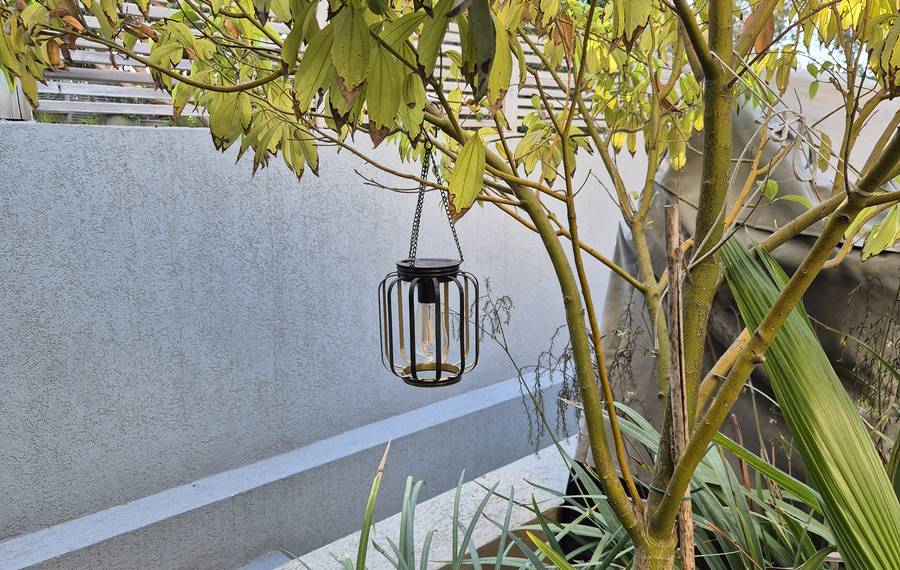
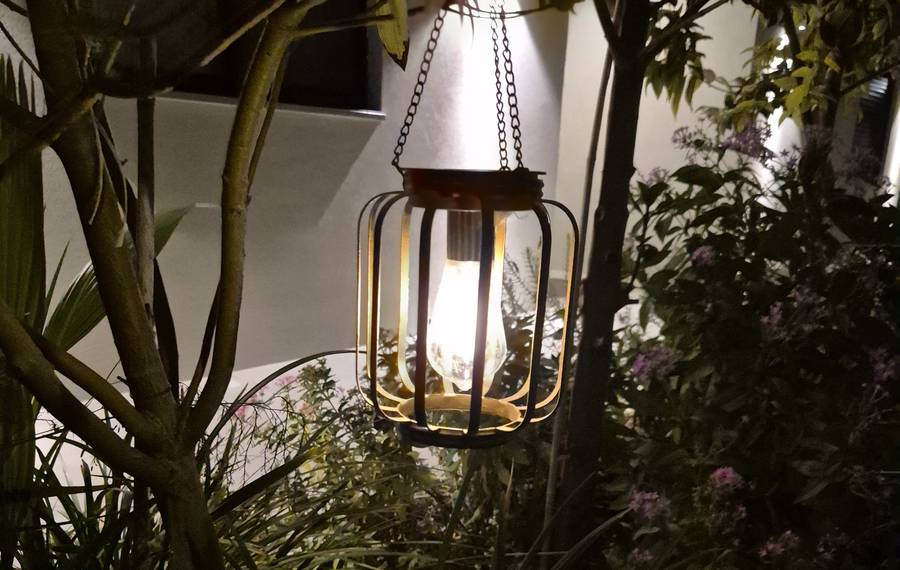
Most "these lights are weak" reviews are placement stories. The panel needs hours of direct sun — a north-facing balcony rail or a spot under a pergola halves the night. Three practical rules: separate-panel designs (like our G40 set) let you hang lights in shade while the panel sits in sun; clean the panel occasionally, because dust taxes charging more than people expect; and in winter, expect shorter run times everywhere — fewer daylight hours in, fewer lit hours out. Our own numbers make the point: the lantern hanging in a partly-shaded tree runs 4–5 hours a night, while the porch sets with sunnier panels go all evening. Our garden guide covers the broader outdoor checks.
Why solar lights die — and the cheap revival
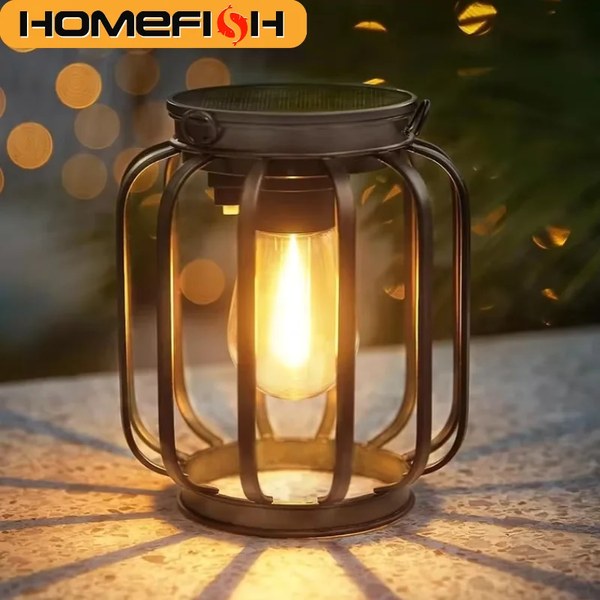
The lifecycle question has a genuinely useful answer. A solar light is three parts with three different lifespans: LEDs (many years), panel (many years, slowly declining), and the rechargeable battery — the part that actually dies, typically after one to two years of daily charge cycles. The revival trick most people don't know: many stake and lantern designs run on a standard AA or AAA NiMH cell under a cover — a dollar-grade replacement brings a "dead" light back completely. Before buying, it's worth checking whether the battery compartment opens; sealed units are disposable by design. If a light dies young, work the checklist in order: shaded or dirty panel → battery → corroded switch contacts. Genuine circuit failure is the rare last case.
Frequently asked questions
Are AliExpress solar lights any good?
The good ones are genuinely good — we run three solar lights nightly on nothing but sunlight, one for over a year of weather. The category splits by type: string lights and pathway markers are mature and reliable; the further you go toward "floodlight" and "street light" claims, the wider the gap between the listing and reality. Panel placement matters more than product choice — full daytime sun is the whole game.
Why do solar lights suddenly stop working?
Three causes cover nearly every case: a dirty or shaded panel that no longer charges enough (clean it, move it), a worn-out rechargeable battery — the usual culprit after a year or two, and in many designs it's a standard AA/AAA NiMH cell you can replace for a dollar — or a corroded switch and contacts from moisture. Genuine electronics failure is the rare fourth. Try panel, then battery, then contacts, in that order.
How long do solar garden lights last?
Think of it as two lifespans: the rechargeable battery typically fades after 1–2 years of daily cycling, while the panel and LEDs are good for many years. Cheap lights die when their battery does — the trick is that many use standard replaceable cells, so a dollar battery revives a "dead" light. Sealed units are done when the battery is done, which is worth checking before buying.
What do the mAh and lumen numbers on listings mean?
Treat them as decoration. Battery capacity and brightness claims on anonymous solar-light listings are routinely inflated — the countable specs (number of LEDs, physical panel size, cable length, IP rating) are the honest ones. A physically bigger panel beats a bigger printed mAh number every time, because the panel determines how much charge actually arrives.
The three we run — the 32M fairy strand, the G40 porch globes, and the hanging tree lantern — are in the Garden & Outdoor roundup with the rest of our owner-tested outdoor gear.