Most damage to Pokémon cards isn't dramatic. It's a corner softened in a pocket that was too tight, a holo that curled in a humid room, a row of dents from a ring binder, or a rubber band around a stack. All of it is preventable with a few cheap layers, used in the right order for the right cards.
This guide covers that order: what each layer does, which cards deserve which layer, and what to check on an AliExpress listing before you buy. A straight disclosure first: we haven't bought and tested the specific products linked below. The advice comes from how card protection works, and the products are listings we track in our price study, chosen on specs, sold counts and seller checks. If we test any of them ourselves, the page will say so.
The short answer: match the protection to the card
Not every card needs the same treatment. Sleeving and toploading 600 commons is wasted money and shelf space, while a binder pocket alone isn't enough for a card you'd be upset to bend. The usual ladder:
| The card | Protection | Why |
|---|---|---|
| Bulk commons and energies | A storage box, sorted, no sleeves | Low value per card, and an upright box keeps them flat and dust-free |
| Favourites and set progress | Side-loading binder (penny sleeve optional) | Easy to browse, protected from dust and handling |
| Valuable singles | Penny sleeve, then a 35pt toploader | The sleeve stops scratches and the toploader stops bends |
| Cards going for grading | Penny sleeve, then a semi-rigid holder | Graders generally ask for semi-rigid holders; check your grader's current guide |
| A deck you play with | Matte deck sleeves in a deck box | Shuffling wears bare cards fast |
| Sealed ETBs and booster boxes | A PET protector or acrylic case | Box condition is part of a sealed product's value |
Layer one: the penny sleeve
A penny sleeve is a thin, soft, clear sleeve, and it's the cheapest meaningful thing you can do for a card. It stops surface scratches, fingerprints and edge rub when cards are handled or slid into anything else. It doesn't stop bending. That's the toploader's job.
Size is the one thing to get right. Pokémon cards are standard size, 63×88mm, the same as Magic and sports cards. Japanese Pokémon cards are the same size as English ones. Sleeves labelled "Japanese size" or "small size" are cut for Yu-Gi-Oh-sized cards (59×86mm) and won't fit a Pokémon card. On AliExpress, look for "standard size" or the 63×88mm figure in the listing.
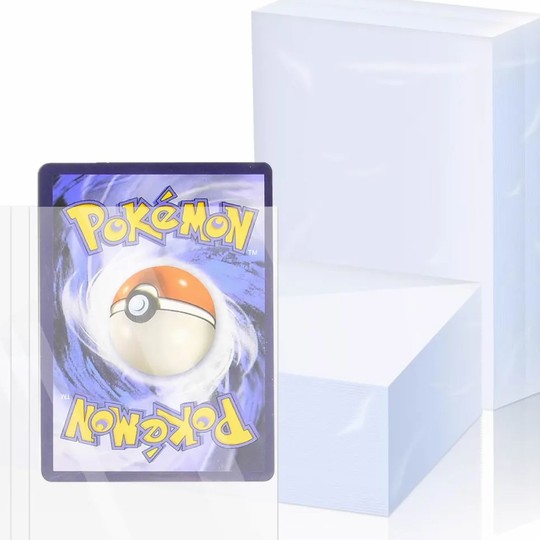
A 200-pack is the right first buy. Penny sleeves are consumables: they scuff and get replaced, so there's no point buying premium ones for everyday cards. 2,000+ sold.
Layer two: the toploader
A toploader is a rigid clear plastic holder, and it's what actually stops a card bending. The order matters: card into a penny sleeve first, then the sleeved card into the toploader. Sliding a bare card into rigid plastic can scuff the surface and catch the corners on the way in.
35pt is the standard thickness for a normal Pokémon card. Higher numbers (55pt, 75pt and up) are for thicker cards such as jumbo or memorabilia cards; a normal card will rattle around in them. Never tape a toploader shut over the card. If you're mailing one, put the toploader in a resealable "team bag" or tape the outside of the bag instead.
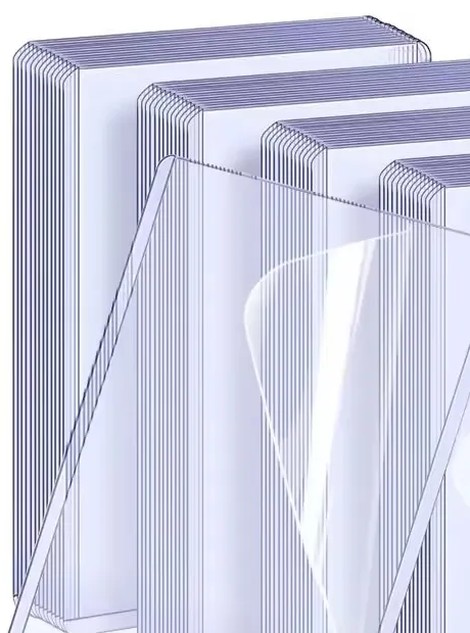
The price shown is the smallest pack; larger packs cost more in total but less per toploader. 10,000+ sold. Cheap enough that there's no reason to ration them for cards you care about.
Grading is the exception. If a card is going to a grading company, most graders ask for it in a semi-rigid holder (a "card saver") rather than a toploader. Toploaders grip cards tightly, so getting a card out risks the very damage the grade would record. Check your grader's current submission guide before you pack anything.
Binders: what makes one safe
Binders are how most collectors store a set, and also where most avoidable damage happens. Three things decide whether a binder protects cards or slowly harms them:
- No rings. In a ring binder, the cards in the column nearest the rings get pressed by the ring when the binder closes, and pages can crimp where they're punched. Card-collecting binders with fixed, sewn-in pages avoid this entirely.
- Side-loading pockets. Cards go in from the side, not the top, so they don't slide out when the binder is tipped or carried upright.
- The right pocket fit. A sleeved card should slide into the pocket without forcing it. If you have to push, the pocket bends the card a little every time. Also check whether the listing says the pages are PVC-free (polypropylene); old-style PVC pages can contain softening chemicals that collectors avoid for long-term storage.
A 9-pocket page holds 18 cards with both sides filled, so check the page count against the set you're filling before you buy. Running out of pages halfway through a set is the classic mistake. Store full binders upright on a shelf like books, not in a stack with things piled on top.
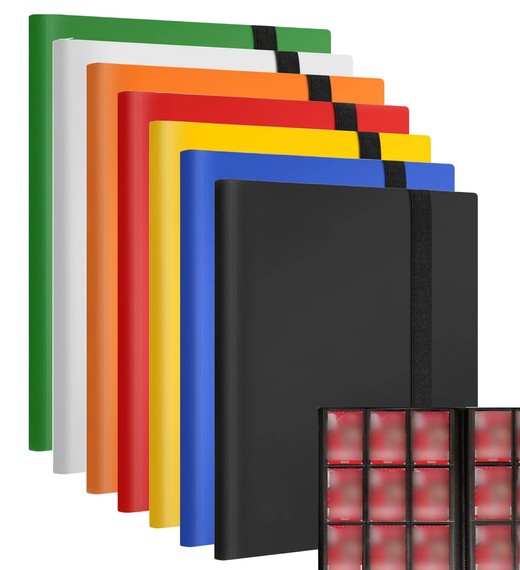
Side-loading, no rings, 20 pages and an elastic strap closure. 10,000+ sold, the best-selling binder listing we track.
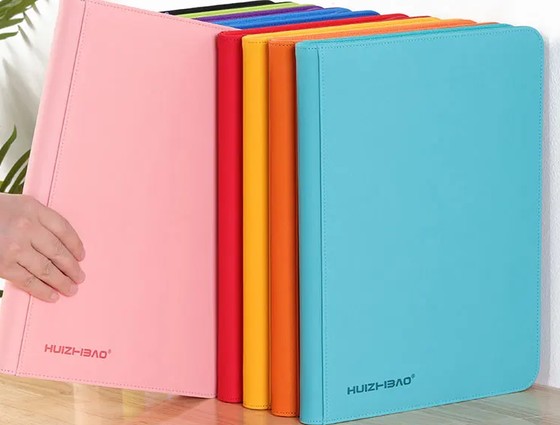
The upgrade is the zip: nothing slides out in a bag and dust stays out of the page edges. Worth it if the binder travels to trades or league nights. For one that stays on a shelf, the strap binder above does the same protective job for about a quarter of the price.
Bulk storage: boxes, not bags or rubber bands
Once a collection outgrows binders, bulk cards go in boxes, stored upright and snug enough that cards don't slump, with dividers to keep sets sorted. Two habits to drop: rubber bands, which dent the edges of the top and bottom cards in every stack, and loose zip bags, which let cards shift and bend.
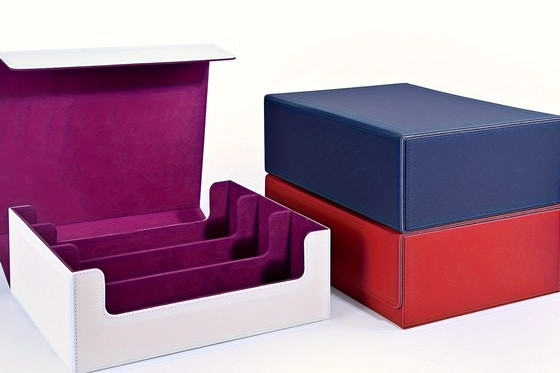
Movable dividers and a magnetic lid in a box built to sit on a shelf. 4,000+ sold. A plain cardboard storage box does the same protective job for less; this one is for collections on display.
Where you keep them matters as much as what they're in
- Humidity is the main enemy. Damp air makes cards curl, and holo and reverse-holo cards curl first because the foil layer and the paper absorb moisture differently. Avoid basements, garages, attics and anywhere near a bathroom. A few silica gel packets in a storage box help in humid climates.
- Sunlight fades. Keep binders closed and displays out of direct sun. Don't assume an acrylic case blocks UV unless the listing specifically says it filters UV.
- Heat warps. A car in summer or a shelf over a radiator will bend cards and soften plastic sleeves.
- Hands. Handle valuable cards by the edges, with dry, clean hands, before they're sleeved.
Sealed product: ETBs and booster boxes
If you keep sealed product, the box's condition is part of its value. Dents, crushed corners and shelf wear all count against it if you ever sell. You have two options: a rigid acrylic case for the box you display, or thin PET protectors that slide over the box like a sleeve, which make more sense when you're storing several.
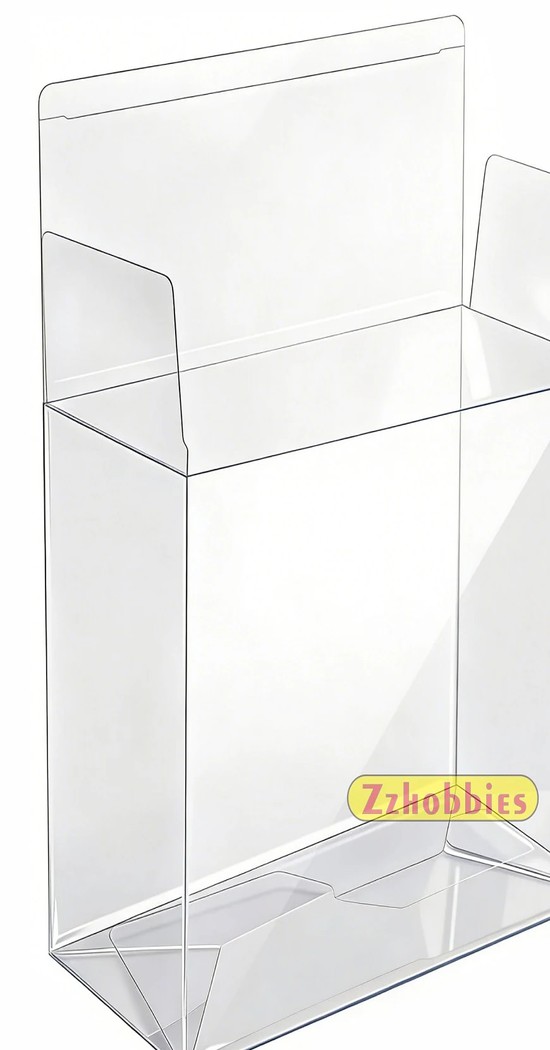
Sold in packs, so the per-box cost drops if you're protecting several. 4,000+ sold. The rigid acrylic alternative is on our accessories page, along with display stands and deck boxes.
What to buy for your collection
- Just started (a few packs): penny sleeves plus a 9-pocket binder, about $13 at the prices on this page. That covers almost everything a new collector needs.
- A few cards worth real money: add toploaders for those cards only.
- You play the game: matte deck sleeves and a deck box. Penny sleeves aren't made for shuffling.
- Hundreds of cards: a storage box for the bulk, and keep the binder for the cards you actually want to look at.
On pricing: prices were checked on 22 November 2026. The 11.11 sale had ended, but AliExpress's Black Friday campaign was already running (into early December), and in our price study prices carried over from 11.11 unchanged. We'll check again once the sales are over. Prices also vary by country, so check the live listing.
Frequently asked questions
What's the best way to store Pokémon cards?
Match the protection to the card. Bulk commons go upright in a storage box; favourites go in a side-loading binder with no rings; valuable cards go in a penny sleeve and then a 35pt toploader. Keep everything somewhere cool, dry and out of direct sunlight, because humidity and heat do more long-term damage than handling.
Are binders safe for Pokémon cards?
Card-collecting binders with fixed, side-loading pages are. Ring binders are the risky kind: the rings press into the cards nearest them, and punched pages can crimp. Also make sure a sleeved card slides into a pocket without forcing it; a pocket that's too tight bends the card every time.
Should I sleeve cards before putting them in a binder?
For cards you care about, yes. A penny sleeve adds scratch protection when cards are slid in and out of pockets. For bulk commons it isn't necessary. Check the binder's pockets fit a sleeved card, since some are cut close to bare-card size.
How do I stop my Pokémon cards curling?
Curl is mostly moisture, and holo cards are the most prone to it. Store cards in a dry room away from bathrooms, basements and outside walls, keep them in sleeves and toploaders or snug boxes, and add silica gel packets in humid climates. Mildly curled cards often flatten again once they're kept dry in a toploader for a while.
Do Japanese Pokémon cards need different sleeves?
No. Japanese Pokémon cards are the same 63×88mm size as English ones and use standard sleeves. "Japanese size" sleeves are a different, smaller size made for Yu-Gi-Oh and similar games, and they won't fit a Pokémon card.
Looking for more storage and display gear? Our Pokémon accessories page covers deck boxes, acrylic cases and display stands. If you're shopping for cards rather than storage, read our guide to AliExpress Pokémon cards first. Buying for someone else? Try our Pokémon gift ideas under $25.
Spotted a wrong price, a dead listing, or a claim that doesn't hold up? Tell me and I'll fix it — reader corrections have already made these pages better more than once.